

What is StoneHenge ????
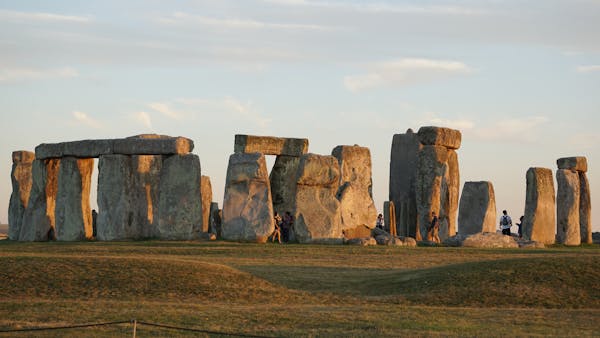
Stonehenge is a prehistoric monument located on the Salisbury Plain in Wiltshire, England. Its history spans thousands of years, and while many aspects of its origin and purpose remain shrouded in mystery, archaeologists and historians have made significant discoveries over the years.
Here is an overview of the history of Stonehenge
Early Stages (circa 3100 BC): The history of Stonehenge begins with the construction of the earthwork enclosure known as the "henge" around 3100 BC. This consisted of a circular ditch and bank, with the ditch on the inside. The purpose of this initial phase is still debated, but it likely had religious, ritual, or astronomical significance.
Bluestone Arrival (circa 2600 BC): Around 2600 BC, the first stones, known as bluestones, were transported to the site from the Preseli Hills in Wales, over 150 miles away. This remarkable feat of prehistoric engineering remains a subject of fascination and debate.
Sarsen Stones (circa 2500 BC): During the third phase of construction around 2500 BC, enormous sarsen stones were transported from Marlborough Downs, located about 25 miles north of Stonehenge. These massive stones were erected in a circular and horseshoe pattern within the henge.
Alterations and Rearrangement: Over the next few centuries, Stonehenge underwent several alterations and rearrangements. The bluestones were rearranged within the sarsen circle, and a stone circle known as the "Q and R Holes" was constructed. Some of the bluestones were also dressed and shaped.
End of Construction (circa 1600 BC): The final stage of Stonehenge's construction took place around 1600 BC when the site reached its most recognizable form. The bluestones were set up in a horseshoe pattern, and a lintel was placed atop the sarsen stones. The Heel Stone, a large sarsen stone, was positioned outside the entrance.
Purpose and Function: The exact purpose of Stonehenge remains a subject of debate. It is widely believed to have served as a religious or ceremonial site, possibly related to the tracking of celestial events, such as solstices and eclipses. The alignment of Stonehenge's stones with the movements of the sun and moon has led to theories about its use as an astronomical observatory.
Abandonment and Neglect: Stonehenge was likely used for several centuries, but by the end of the Bronze Age (circa 800 BC), it appears to have fallen into disuse and neglect. The reasons for its abandonment remain unclear.
Preservation and Conservation: Over the centuries, Stonehenge faced threats from erosion, vandalism, and unauthorized excavations. In the 20th century, efforts to protect and preserve the monument led to its designation as a UNESCO World Heritage Site in 1986. Visitors are no longer allowed to touch the stones, and the surrounding landscape has been protected.
Ongoing Research: Archaeological excavations and research continue to shed light on Stonehenge's history and purpose. Recent discoveries have revealed additional features and settlements in the surrounding area, contributing to our understanding of the site's broader context.
Stonehenge remains one of the world's most iconic and enigmatic ancient monuments, drawing visitors and researchers from around the globe. While many of its secrets persist, the monument's enduring appeal lies in its mysterious origins and the questions it continues to pose to this day.


No comments:
Post a Comment